22 July 2026 · Pratima Pre-Mix
Gud Powder vs Sugar: What's the Real Difference?
The short answer: both gud powder and white sugar come from sugarcane, but gud powder is minimally processed — the juice is simply boiled, set and ground — while white sugar is refined and crystallised until everything except pure sucrose is stripped away. That single difference explains the contrast in colour, flavour and character.
How each one is made
Gud (jaggery) powder starts as fresh sugarcane juice that is clarified and slow-cooked in open pans until it thickens, then cooled and ground into a fine golden powder. Refined sugar goes much further: the juice is crystallised, centrifuged, filtered and whitened until only neutral-tasting sucrose crystals remain.
Taste and colour
Because nothing is stripped away, gud powder keeps a warm caramel flavour and golden-brown colour. White sugar is deliberately neutral — pure sweetness with no character. In chai, coffee, ladoos and halwa, that caramel depth is exactly what traditional recipes expect.
What about minerals?
Jaggery retains traces of the minerals naturally present in sugarcane. Our lab-tested powder shows iron (8.1 mg/100 g), calcium (212 mg), potassium (540 mg) and magnesium (40 mg) on its printed nutrition panel — amounts refined sugar simply doesn't carry. It is still a sugar, though, so treat it as a better-tasting sweetener, not a supplement.
How to swap sugar for gud powder
Replace sugar 1:1 with gud powder in tea, coffee, milk, desserts and baking. It dissolves quickly because it's finely ground — no grating jaggery blocks, no waiting.
Note: gud powder is a natural sugar and should be enjoyed in moderation, like any sweetener.
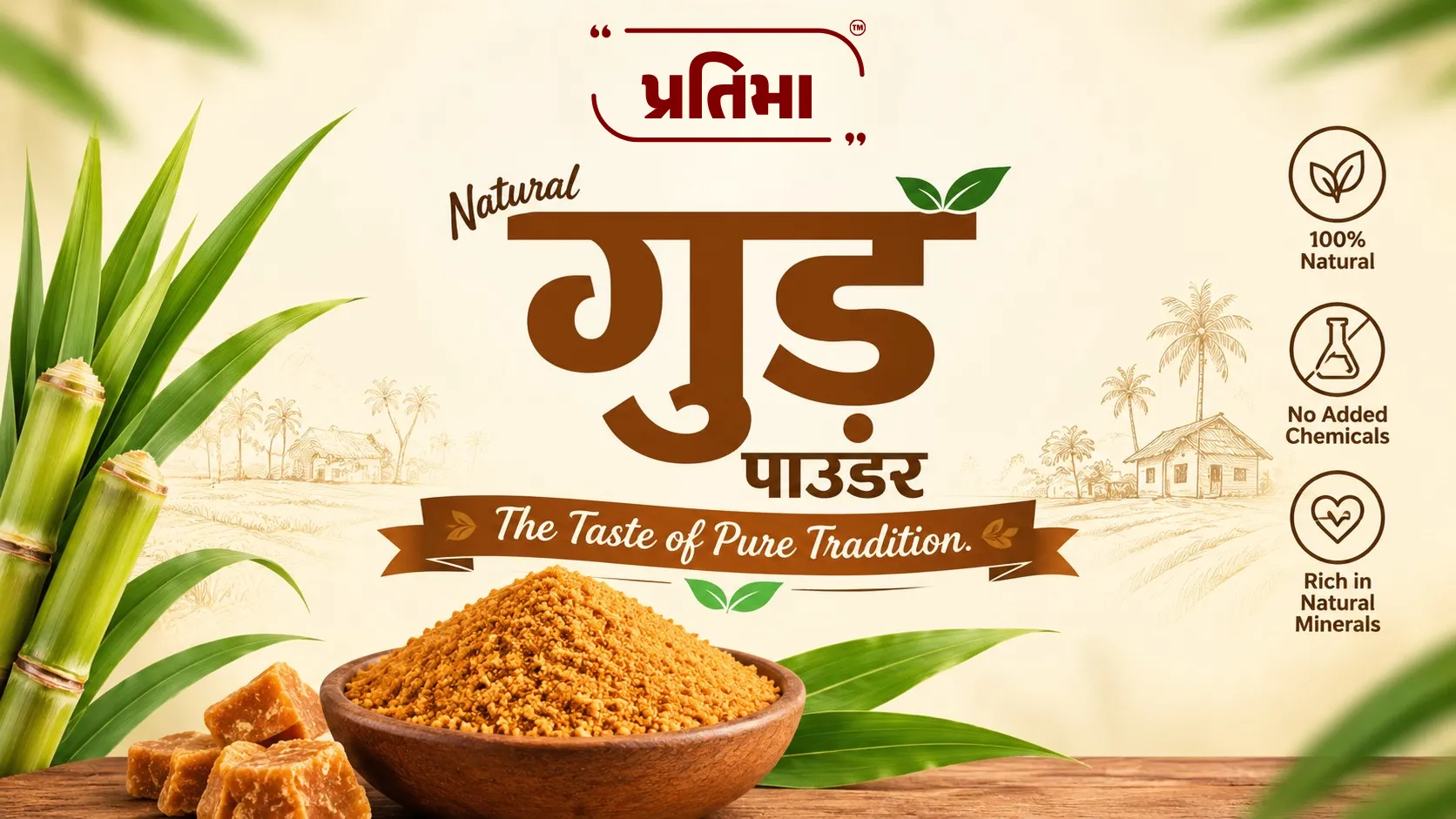
Try it yourself: order 100% natural Gud Powder — 500 g for ₹149 or 1 kg for ₹279 — delivered across India.